Types of Medical Eye Protection
Choosing the Right Safety Solutions for Clinical Environments

Medical eye protection plays a critical role in protecting healthcare professionals from occupational hazards such as bloodborne pathogens, chemical splashes, laser exposure, and ionizing radiation. Selecting the right type of eye protection is not just a compliance issue – it directly affects staff safety, workflow efficiency, and long-term health outcomes.
This guide outlines the primary types of medical eye protection, with a deeper focus on radiation protection glasses used in diagnostic imaging and interventional environments.
Healthcare environments expose staff to a wide range of risks depending on their role, procedures performed, and equipment used. Eye injuries and cumulative exposure can occur gradually, making proper protection essential even when immediate risk is not obvious.
Effective eye protection should:
Match the specific hazard present
Be worn consistently and comfortably
Integrate into established safety protocols
Meet applicable regulatory and facility standards
Safety glasses provide basic impact protection and are commonly used in general clinical and laboratory settings. They typically include side shields to protect against debris or splashes.
Best suited for:
Low-risk environments where impact or minor splash protection is needed.
Goggles offer a tighter seal around the eyes, providing increased protection from liquid splashes, aerosols, and airborne contaminants.
Best suited for:
Infection control areas, laboratories, and procedures involving bodily fluids or chemicals.
Face shields provide full-face coverage and are often worn in combination with safety glasses or goggles. They protect against splashes and droplets but are not designed to replace primary eye protection.
Best suited for:
Procedures with high splash risk or enhanced infection control requirements.
Laser eyewear is engineered to protect against specific laser wavelengths used in surgical and therapeutic applications.
Best suited for:
Operating rooms and clinical environments using medical lasers.

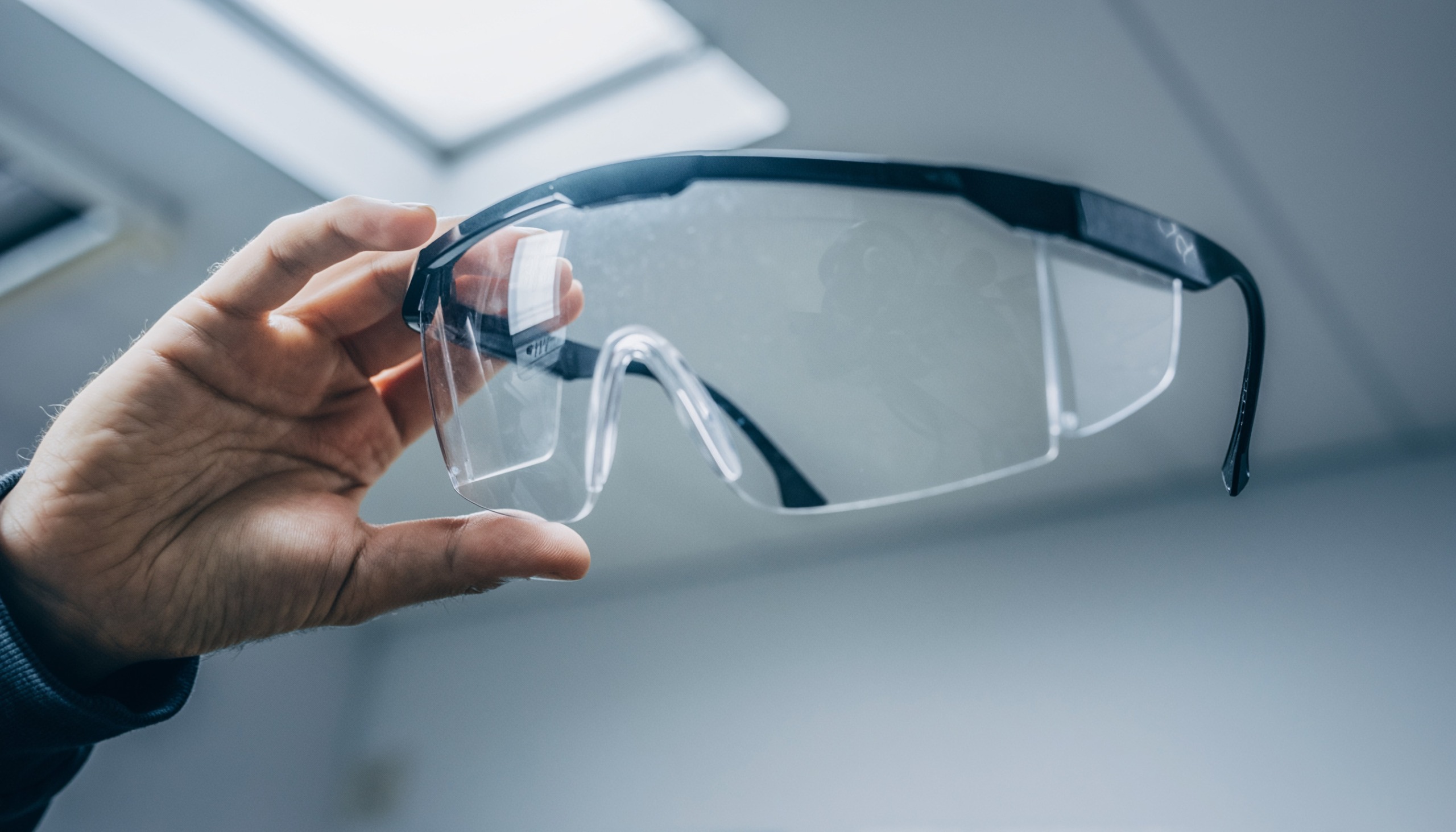

Radiation protection glasses are a specialized form of medical eye protection designed to reduce exposure to scatter radiation during diagnostic imaging and interventional procedures.
The eye lens is particularly sensitive to ionizing radiation. Repeated low-dose exposure – common in fluoroscopy, interventional radiology, cardiology, and mobile imaging – can increase the risk of long-term lens damage over time.
Unlike standard safety glasses, radiation protection glasses incorporate lead or lead-equivalent materials to attenuate scatter radiation reaching the eyes.
Radiation eyewear is commonly recommended or required for:
Interventional radiology and cardiology
Fluoroscopy-guided procedures
Pain management and orthopedic imaging
Any setting with frequent or prolonged radiation exposure
When evaluating radiation protection eyewear, facilities should consider:
Lead equivalency: Common levels range from 0.5 mm Pb equivalent, balancing protection and wearability.
Design and coverage: Wraparound frames, side shields, and lens size affect scatter protection.
Comfort and weight: Heavier glasses reduce compliance during long procedures.
Prescription options: Rx integration supports consistent use.
Fit and adjustability: Proper fit ensures protection without interfering with workflow.
Cleaning and durability: Glasses must withstand repeated disinfection and daily clinical use.
Radiation protection glasses should be treated as part of a long-term safety program, not a one-time purchase.
Eye protection is most effective when incorporated into a broader radiation safety strategy that includes:
Protective apparel such as lead aprons and thyroid shields
Clear staff training and usage protocols
Routine inspection and replacement policies
Alignment with institutional safety and compliance guidelines
Consistent use and proper selection help reduce cumulative exposure and support a safer working environment for imaging professionals.
There is no single solution that fits every clinical environment. The right eye protection depends on:
The procedures performed
Frequency and duration of exposure
Staff roles and comfort requirements
Existing safety protocols and infrastructure
Healthcare organizations benefit from evaluating eye protection as part of a holistic PPE and imaging safety plan, rather than addressing hazards in isolation.
AADCO Medical supports healthcare facilities with radiation protection and medical PPE solutions designed for real-world clinical use. From diagnostic imaging to interventional procedures, proper eye protection plays a vital role in protecting staff while maintaining efficient workflows.
Whether you’re evaluating imaging equipment, reviewing safety protocols, or planning facility upgrades, having the right radiation protection solutions in place matters.
AADCO Medical works with healthcare providers, imaging centers, and medical facilities nationwide to support diagnostic imaging safety through high-quality radiation protection products and clinical expertise.
Explore radiation protection solutions designed to support portable and fixed imaging environments – or contact our team to discuss your specific application.

 The Complete Guide to Lead Aprons for Medical Imaging Professionals